
Please wait while we take you to your selected region.
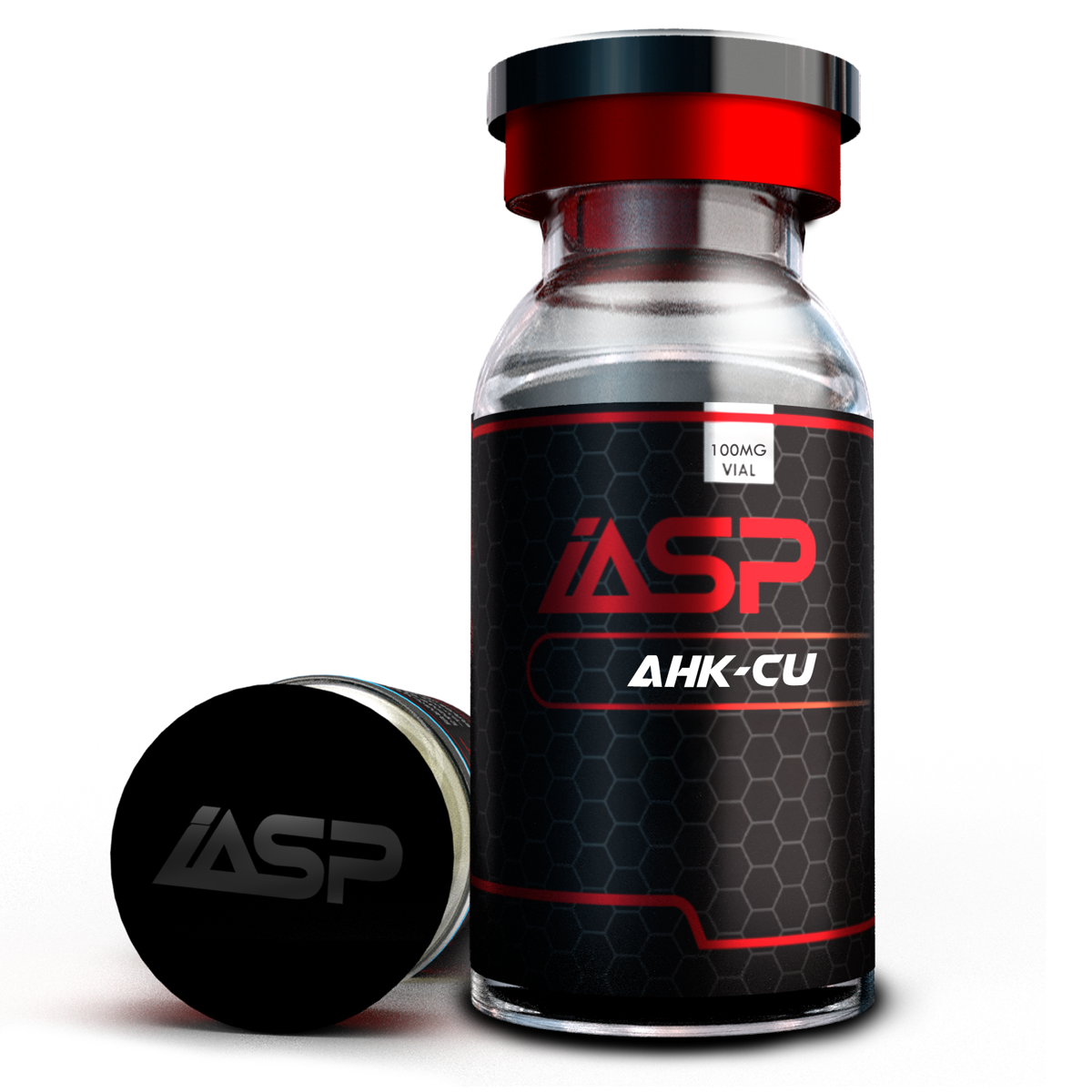
AHK-CU
AHK-Cu (Copper Tripeptide-3) is a copper-binding tripeptide composed of alanine, histidine, and lysine coordinated with copper. It has attracted research interest primarily because of its potential effects on hair follicle activity and skin biology. Unlike the more widely discussed GHK-Cu, AHK-Cu has been investigated specifically in connection with dermal papilla cells, which are specialized cells located within hair follicles and play an important role in regulating hair growth. Research has explored whether AHK-Cu can influence these cells and support processes associated with the hair-growth cycle.
One of the most notable studies on AHK-Cu examined its effects on human hair follicles and cultured dermal papilla cells. In an ex vivo model, AHK-Cu was associated with increased hair-follicle elongation, while laboratory testing found increased proliferation of dermal papilla cells. These findings provide a scientific basis for continued investigation of AHK-Cu as a potential hair-focused peptide. However, these results were obtained in laboratory and ex vivo settings, so they should not be interpreted as proof that the peptide produces the same effects when used in people.
AHK-Cu is also studied in relation to cellular activity and tissue-support processes. Research has examined changes in markers associated with cell survival and proliferation in dermal papilla cells. Because these cells contribute to the signaling environment of the hair follicle, their activity is an important area of research in understanding hair growth. AHK-Cu's interaction with copper is also relevant because copper-containing peptides have been investigated for their involvement in biological processes related to tissue maintenance and repair.
In the context of hair health research, the potential benefits of AHK-Cu are therefore mainly associated with supporting the biological activity of hair follicles. These include potential support for dermal papilla cell proliferation, hair-follicle growth, and maintenance of follicular activity. The existing evidence is particularly interesting because the research has involved human-derived hair follicles and human dermal papilla cells rather than relying exclusively on animal models.
AHK-Cu has also been discussed in relation to skin health and tissue biology. Copper-binding peptides are studied for their possible involvement in processes connected with fibroblast activity, extracellular-matrix production, and tissue remodeling. These areas are relevant to skin structure because fibroblasts contribute to the production and organization of proteins that help maintain connective tissue. However, evidence for these effects should be distinguished from direct clinical evidence showing that AHK-Cu itself improves human skin. Much of the established literature on copper-peptide biology involves related peptides, particularly GHK-Cu, rather than AHK-Cu specifically.
Another area of interest is hair-follicle cell survival. Laboratory research has examined markers associated with apoptosis, or programmed cell death, in dermal papilla cells following AHK-Cu exposure. The study reported changes in several molecular markers consistent with increased cell survival under the tested experimental conditions. These findings may help explain why AHK-Cu continues to be investigated in hair-follicle research, although laboratory findings do not establish a clinical benefit in humans.
Overall, AHK-Cu can be described as an experimental copper-binding peptide primarily investigated for hair-follicle and skin-related biological activity. Its most distinctive research area is hair biology, particularly the behavior of dermal papilla cells and the growth of human hair follicles in laboratory models. Potential areas of interest include hair-follicle activity, dermal papilla cell proliferation, cellular support, and skin-related tissue processes. Current research provides promising biological findings, but additional human clinical research is needed to determine how well these laboratory observations translate into measurable outcomes in people.
For an educational product database, the key point is that AHK-Cu is best characterized by its research interest in hair-follicle biology and cellular activity, rather than by presenting it as a proven treatment or guaranteed hair-growth solution. Its potential benefits remain an area of scientific investigation, and the strongest evidence currently available comes from laboratory and ex vivo studies. This distinction is important when describing AHK-Cu accurately and keeping its biological claims consistent with the available research.